Featheredge fencing for a 20 metre boundary
A new boundary is a different job from a repair. Every panel, post and board goes in at once, and the line has to be right before the first post is set. This guide works a 20 metre run of featheredge in Meopham or Istead Rise, where back gardens often run out to open ground, and counts each part from the length of the run.
Gravesend BM is the Gravesend and Meopham delivery site of Discount Builders Merchants (KENT) LTD, the builders' merchant at Lower Road, Northfleet, DA11 9BB. There is one yard, and orders are placed on www.discountbm.co.uk.

Choosing the panel
Featheredge is a closeboard panel, with vertical boards fixed to a frame. It is heavier than a waney lap panel and holds its shape better in a gust, which suits a boundary that takes the weather from one side. A 5 ft panel is 1.52 metres high and 6 ft wide like the taller panel, so the count of panels depends on the width alone.
Check the height the council allows along the boundary before the panels are chosen. A fence beside a road, or one over the limit, may need consent, and a gravel board counts towards the total height. A 5 ft panel on a 6 inch board stands about 1.67 metres, which is often inside the usual 2 metre limit at the back. A 6 ft panel on a 6 inch board stands about 1.98 metres: within 2 m at the back, but over 1 m at the front or beside a road.
Posts and the line
The posts are slotted concrete, so each panel drops in from above and lifts out when it needs replacing. A 2.4 metre post with a 5 ft panel on a 6 inch board buries about 730 mm, which leaves its top level with the top of the panel. Each post sits at the joint between two bays, shared by the panels either side, and a corner post goes wherever the line turns.
Set the corner posts first and string a line between them, pulled tight at the height of the panel tops. Set each post to the line and check it for plumb both ways. A post a few millimetres off the line shows as a bow along the whole run, and it is far easier to fix before the mix goes off.
Digging and setting the posts
Dig each hole about 730 mm deep and wide enough to tamp post mix on all four sides. Put a layer of gravel in the bottom so water drains away from the post. Stand the post in the hole, check it, and pour in the mix, tamping it down the sides as it goes. A post set this way is firm enough to hang panels the next day.
On soft ground, or on a run that catches the wind across open land, use two bags of post mix for each post. A run set on one bag a post can lean in its first wet winter, and the lean is hard to correct once the panels are hung.
Hanging the boards and panels
Set a gravel board into the slots first, one to each bay, and then slide the panel down into the same slots above it. Concrete boards last longest, and the board keeps the timber clear of wet soil. The posts make bays 1.83 metres between centres, so lay out the post centres at that spacing before anything is hung.
The last bay is usually short of a full panel. Cut the panel to the gap, then fix it with the cut edge against a post, where the join is least seen from the lawn. Sealing the cut edge with a preservative keeps the timber sound where it meets the weather.
Measuring, ordering and delivery
Measure the length along the boundary itself rather than the house wall, and round the number of bays up. Mark the post centres with pegs and check the gaps between them before the order is placed, since two sides of an old run are seldom the same length. Count the gates separately, and give their width.
A whole boundary is a delivery job. Panels are heavy, posts are heavier for their length, and a van will carry only part of a run in one trip. Give the yard the house number, the lane and the side the garden is on, so the lorry stops where the load can be carried to the fence line.
Rules of thumb
| Panels | 6 ft (1.83 m) wide and 5 ft (1.52 m) high. Divide the length of the run by 1.83 m and round up. |
|---|---|
| Posts | One more than the panels, one at each joint between bays, with a corner post where the line turns. |
| Post length and burial | 2.4 m for a 5 ft panel on a 6 inch board, with about 730 mm in the ground. |
| Post mix | One 20 kg bag a post on sound ground, two on soft or exposed ground. |
| Gravel boards | One under each panel, set in the same slots as the panel above it. |
The shop has calculators that turn a measurement into a quantity.
Worked order: A 20 metre featheredge boundary in Meopham
| Product | Quantity | What it is for | Cost |
|---|---|---|---|
| 6'x5' Featheredge Panel | 11 at £37.99 | Twenty metres over 1.83 m a bay is 10.9, so eleven. The last panel is cut down to fill the gap at the end of the run. | £417.89 |
| 2.4mtr Slotted Concrete Post (8') | 12 at £18.75 | One post more than the panels, so twelve. Each takes about 730 mm in the ground, which leaves its top level with the panel. | £225.00 |
| 1830x50x150mm (6") ** Light Weight** Recessed Concrete Gravel Board | 11 at £12.50 | One under each panel. The six inch board holds the panel 150 mm off the soil, so the finished fence stands about 1.67 metres. | £137.50 |
| Postmix / Postcrete approx. 20kg | 24 at £4.16 | Two 20 kg bags for each post on an exposed run, 480 kg in all. Twelve bags would do on sheltered ground. | £99.84 |
| Goods | £880.23 | ||
| Delivery to DA13 | £0.00 | ||
| Delivered total ex VAT | £880.23 | ||
| Delivered total inc VAT | £1,056.28 | ||
Not in this order: Concrete for any hole that needs more than post mix, the removal of an old fence, the gravel for the foot of each hole, and gates.
The quantities are a starting point for a job of this size. Put the same goods in a basket on www.discountbm.co.uk with your own postcode to see the figure for your order, or send the yard your list.
On the shop today
The products this guide talks about, from the shop's Fencing Supplies aisle. Prices last checked .
-
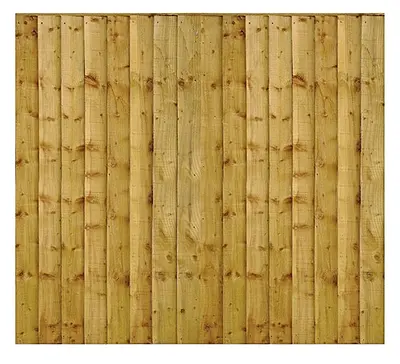 6'x5' Featheredge Panel
each
£45.59 inc VAT
£37.99 ex VAT
In the yard
-
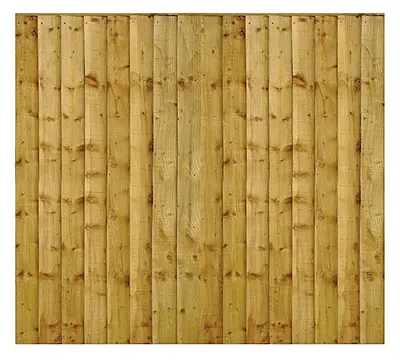 6'x6' Featheredge Panel
each
£47.99 inc VAT
£39.99 ex VAT
In the yard
-
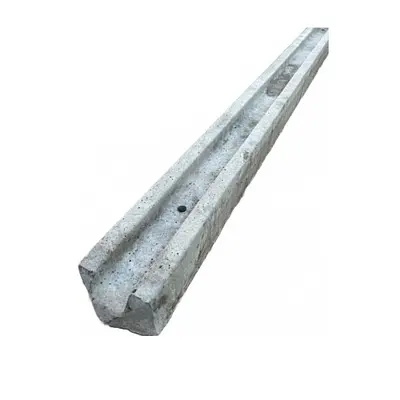 2.4mtr Slotted Concrete Post (8')
each
£22.50 inc VAT
£18.75 ex VAT
In the yard
-
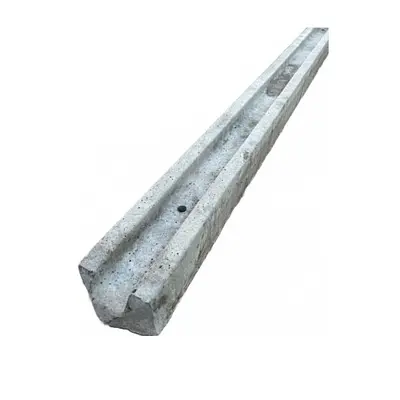 2.7mtr Slotted Concrete Post (9')
each
£30.60 inc VAT
£25.50 ex VAT
In the yard
-
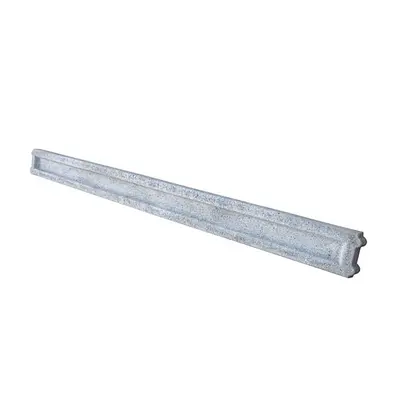 1830x50x150mm (6") ** Light Weight** Recessed Concrete Gravel Board
each
£15.00 inc VAT
£12.50 ex VAT
In the yard
-
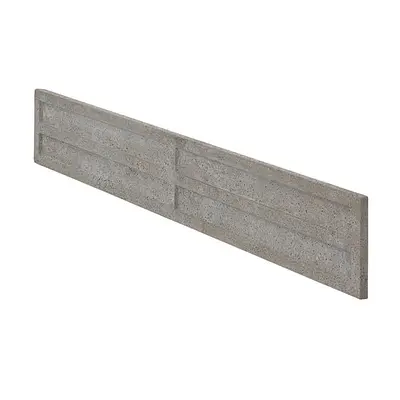 1830x50x300mm (12") ** Light Weight ** Recessed Concrete Gravel Board
each
£24.00 inc VAT
£20.00 ex VAT
In the yard
Prices are the shop's prices today. Stock and ordering are on www.discountbm.co.uk.
Fence panels and posts for Istead Rise and Meopham See all Fencing Supplies on the shop
Delivery to Gravesend and Meopham
- DA11, DA12, DA13
-
Free when the goods reach £41.66 ex VAT (£49.99 inc VAT).
A smaller order pays the difference up to that amount: goods of £25.00 ex VAT (£30.00 inc VAT) pay £16.66 ex VAT (£19.99 inc VAT) for delivery.
More guides for Gravesend and Meopham
- A concrete base for a garden shed Concrete for a 2.4 metre garden shed base in Gravesend and Northfleet: the type 1 under it, the slab mix, and the bulk bags and bags to order.
- A dwarf garden wall in dense blocks Dense concrete blocks, a strip footing and mortar sand for a 6 metre dwarf garden wall in Shorne, Cobham and Chalk, counted block by block.
- A raised bed in treated timber A 2.4 by 1.2 metre raised bed in Northfleet and Perry Street: treated 4 by 2 boards cut from six lengths, and a bulk bag of topsoil to fill it.