A dwarf garden wall in dense blocks
A low wall round a patio, a raised lawn or a front garden is usually a single skin of block on a footing, and it can go up in a few days once the footing has set. This guide works a six metre wall, 900 mm high, in dense blocks, which hold up at ground level. It counts the blocks, the footing, the sand and the cement, and it names the parts that the council or a designer must settle first.
Gravesend BM is the Gravesend and Meopham delivery site of Discount Builders Merchants (KENT) LTD, the builders' merchant at Lower Road, Northfleet, DA11 9BB. There is one yard, and orders are placed on www.discountbm.co.uk.

Why dense block at the bottom
Dense concrete block is heavy, hard wearing and holds up against wet soil and frost. Those are the qualities a wall needs where it meets the ground, and a dwarf wall meets the ground along its whole length. Lighter blocks are easier to lift and to cut, but a low garden wall gains little from them, and they are kept for the inner leaf of a building.
Read the name on the product page before entering a quantity, to check the thickness and the strength. A single skin is usually 100 mm thick. The drawings or the council say whether the wall needs a thicker build, piers at intervals along it, or a coping on top, and those answers change the count.
The footing
A strip footing sits under the wall and is wider than the wall itself. For a single skin at this height a trench about 450 mm wide and 150 mm deep is a common size, but the ground and the design have the final say. Dig down to firm subsoil, through any topsoil or made ground, and test the bottom with a spade before any concrete goes in.
The footing concrete is one part cement to five parts ballast. Ballast comes in bulk bags here, and the cement in bags, and the mix is turned over until it is one colour and wet enough to hold its shape. Pour the footing level, leave it to harden for a day, then start the first course.
Laying the blocks
Start at one end with a line stretched along the top of the course. Lay the first course on a bed of mortar and check it level in both directions. Build up with each block buttered at the ends and along the top, with joints about 10 mm thick. Keep the height gained in a day to about a metre, so the lower courses set before the weight comes on them.
A six metre run is a long line to hold, so check the level every third course and sight along the top as well. Do not cut blocks in the middle of a run. Cut at the ends, and put any cut block at the far end of the wall where it will be least seen.
Mortar and sand
Blockwork is laid in mortar of soft building sand and cement, mixed about five to one by volume. Blockwork uses fewer joints than brickwork, so a square metre of this wall takes a good deal less mortar than the same area of brick. Work the sand out from the area of the wall's face and round the figure up.
Mix only what can be used in about half an hour. Mortar that has begun to stiffen is best thrown out, because mortar that has been loosened with water sets weaker in the joint than the mix it came from.
The order and the site
Put the wall on the order by its length, height and thickness, and say where the blocks can be set down. Packs are heavy, and the footing ballast comes on the same lorry, so decide which side of the garden the load stands on before the day. A path clear enough for a barrow saves a great deal of lifting.
Check where the wall sits in relation to the boundary, and where any drains or cables run, before the footing is dug. A wall on a shared line is a matter for both gardens, so the deeds and the line should be looked at first. Piers and copings are left out of the order below, because the design sets their number and where they go.
Rules of thumb
| Blocks per square metre | Ten 440 x 215 mm blocks, with joints about 10 mm thick. |
|---|---|
| Wall area | Six metres long by 0.9 metres high is 5.4 square metres. |
| Cuts and breakage | Add 5 per cent to the count. |
| Footing volume | 0.45 m wide by 0.15 m deep by 6 m long is about 0.405 cubic metres. |
| Mortar sand | About 24 kg a square metre of wall, which comes to about 0.13 tonnes for this one. |
| Cement | Thirteen 25 kg bags a cubic metre of the one to five footing mix, and about seven bags a tonne of mortar sand. |
The shop has calculators that turn a measurement into a quantity.
Worked order: A 6 x 0.9 metre dwarf wall in Shorne
| Product | Quantity | What it is for | Cost |
|---|---|---|---|
| 100mm Dense Concrete Block 7N (66Void) | 57 at £1.25 | The wall is 5.4 square metres at ten blocks to the square metre, which is 54, plus five per cent for cuts, making 57. Check the thickness in the product name is the one the design gives. | £71.25 |
| Bulk Bag Soft Building Sand Nepicar | 1 at £45.83 | The mortar takes about 130 kg of sand. Soft building sand is listed here in bulk bags, so one bag of about 0.8 tonnes is taken, and the rest is kept for the next job. | £45.83 |
| Bulk Bag Ballast 20mm | 1 at £40.00 | The footing takes about 0.405 cubic metres, or about 0.77 tonnes at 1.9 tonnes a cubic metre. One bag at about 0.8 tonnes just covers it, so the yard should confirm the count. | £40.00 |
| 25kg Mastercrete Cement (plastic) | 8 at £7.99 | Six bags for the footing at thirteen to the cubic metre, and two for the mortar, where the sand works out at about one bag and the second is spare. Eight in all. | £63.92 |
| Goods | £221.00 | ||
| Delivery to DA12 | £0.00 | ||
| Delivered total ex VAT | £221.00 | ||
| Delivered total inc VAT | £265.20 | ||
Bulk bags: the bags in this order are counted at about 0.8 tonnes each. That is a planning figure. The shop does not publish a weight for a bulk bag, so confirm the number of bags with the yard before ordering.
Not in this order: Piers and their blocks, the coping on top, the damp-proof course, and any footing for a gate pier.
The quantities are a starting point for a job of this size. Put the same goods in a basket on www.discountbm.co.uk with your own postcode to see the figure for your order, or send the yard your list.
On the shop today
The products this guide talks about, from the shop's Blocks aisle. Prices last checked .
-
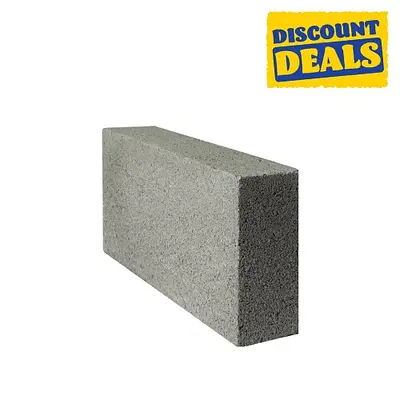 100mm Dense Concrete Block 7N (66Void)
m²
£1.50 inc VAT
£1.25 ex VAT
In the yard
-
 100mm Medium Dense Block 7N (Void pk 84)
m²
£1.86 inc VAT
£1.55 ex VAT
In the yard
-
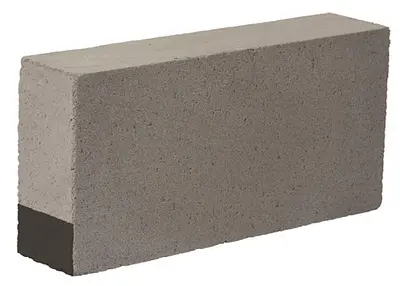 100mm Hi Strength Block 7.3N
m²
£3.54 inc VAT
£2.95 ex VAT
In the yard
-
 140mm Dense Concrete Block 7N
m²
£2.75 inc VAT
£2.29 ex VAT
In the yard
-
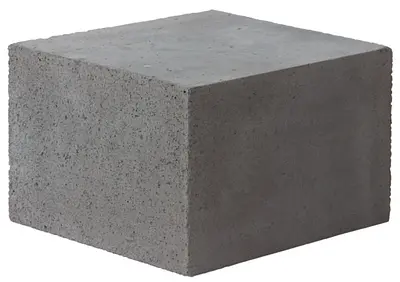 300mm Hi Strength Block 7.3N
m²
£12.00 inc VAT
£10.00 ex VAT
In the yard
Prices are the shop's prices today. Stock and ordering are on www.discountbm.co.uk.
Blockwork for garden walls and garage stores See all Blocks on the shop
Delivery to Gravesend and Meopham
- DA11, DA12, DA13
-
Free when the goods reach £41.66 ex VAT (£49.99 inc VAT).
A smaller order pays the difference up to that amount: goods of £25.00 ex VAT (£30.00 inc VAT) pay £16.66 ex VAT (£19.99 inc VAT) for delivery.
More guides for Gravesend and Meopham
- A concrete base for a garden shed Concrete for a 2.4 metre garden shed base in Gravesend and Northfleet: the type 1 under it, the slab mix, and the bulk bags and bags to order.
- Featheredge fencing for a 20 metre boundary A new 20 metre featheredge boundary in Meopham and Istead Rise: 5 ft panels on concrete posts and gravel boards, with the post mix for an exposed run.
- A raised bed in treated timber A 2.4 by 1.2 metre raised bed in Northfleet and Perry Street: treated 4 by 2 boards cut from six lengths, and a bulk bag of topsoil to fill it.